
Lisbon to Porto Train vs Flight: The Comprehensive Guide
Lisbon to Porto Train vs Flight: The Comprehensive Guide
Lisbon to Porto Train vs Flight: The Comprehensive Guide
Lisbon to Porto Train vs Flight: The Comprehensive Guide
The short version: the train wins for almost every traveler. A rideshare covers this route in about 3 hours and 30 minutes, a flight takes roughly 50 to 60 minutes in the air, and the high-speed train takes about 2 hours 45 minutes to 3 hours — but once you add up real door-to-door time, the train usually comes out ahead or dead even, with a far more comfortable ride.
Lisbon to Porto Train vs Flight
Travel options from Lisbon to Porto include train, bus, and plane, plus rideshare services for travelers who prefer door-to-door private transport. Here's how they stack up:
The total door-to-door travel time for flights is typically longer than for trains once you account for airport transfers, check-in, and security — a pattern echoed throughout the sections below.
High-Speed Train: The Alfa Pendular Service
Direct train departures occur frequently throughout the day, with trains operating from 6:00 AM to 9:30 PM. This frequency means you're rarely stuck waiting long for the next trains, whether you're catching the first train out in the morning or a later evening departure after a full day of sightseeing.
Alfa Pendular tickets include:
- Spacious seating with generous legroom
- Luggage racks for bags of nearly any reasonable size
- Free Wi-Fi and power outlets at every seat
- A café-bar carriage for the journey
Lisboa Oriente Station and Lisboa Santa Apolónia Station

Porto Campanhã Station and Porto São Bento Station

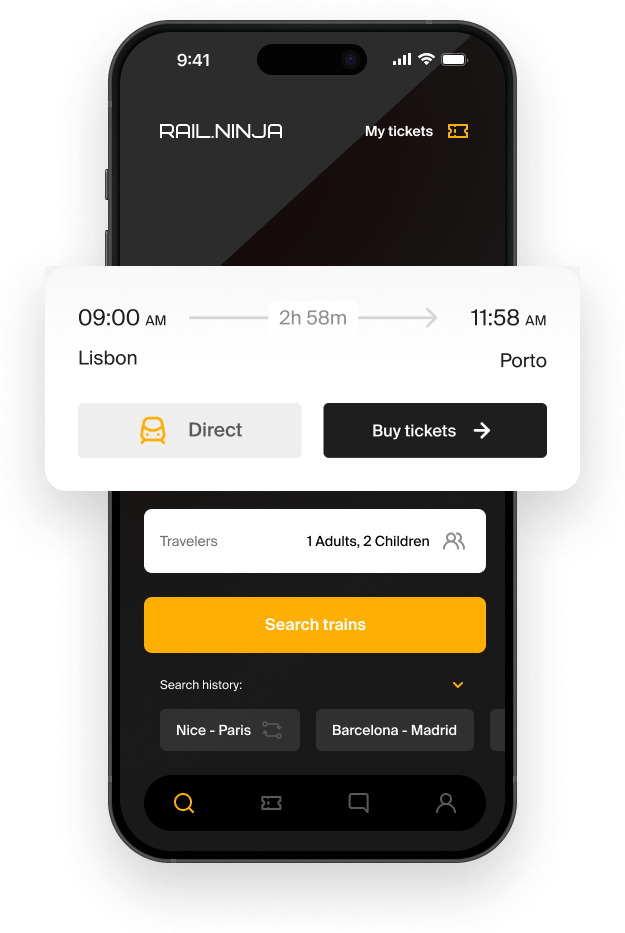

| Ticket Prices and Booking Ticket prices vary depending on the train type, how far in advance you book, and the class of service.
|

| Train Times: Planning Your Journey Train times between the two cities are frequent and well-spread across the day, so you can pick a departure that fits your itinerary rather than building your day around a single train times slot. Whether you want to catch the first train out early to maximize a day trip, or a relaxed mid-afternoon departure, there's a train roughly every 30–60 minutes across the schedule. If you're short on time, it's worth remembering advice that applies to any station transfer: arrive early. Trains don't require airport-style security, but you'll still want a buffer to find your platform, especially at busier stations during peak travel periods. |

| Flight Overview: Fast in the Air, Slower Overall The flight time itself is usually around 50 to 60 minutes, covered by TAP Air Portugal and Ryanair on the Lisbon–Porto corridor. On paper, that number alone makes flying look like the clear winner. In practice, flying typically requires additional time for transfers and security — arriving at the airport, checking in, clearing security, boarding, and then getting from the arrival airport into the actual city center. Add it all up, and total door-to-door flight time regularly stretches to 3.5–4+ hours, which is comparable to — or longer than — the train's roughly three-hour city-center-to-city-center journey. |
Comfort and Onboard Experience
One of the clearest advantages of train travel is the comfortable environment it offers for working or relaxing. Alfa Pendular carriages provide spacious seating, reclining seats, and enough room to get up and stretch, unlike a cramped economy seat on a short domestic flight. If you want to answer emails, read, or simply watch the Portuguese countryside roll by, the train is built for it in a way a 55-minute flight never can be.

| The Scenic Route: Portuguese Countryside and the Douro River Part of what makes the train genuinely enjoyable — rather than just a practical choice — is the scenery. As the train arrives Porto route unfolds, you'll pass rolling Portuguese countryside, glimpses of charming villages, and stretches where the track runs close to the Douro river, particularly as you near Porto. Portuguese history is visible in the landscape itself: old stone farmhouses, terraced hillsides, and small-town stations that have served these routes for generations. For the best scenic views, grab a seat on the left-hand side of the train when traveling from Lisbon to Porto — that side typically gets the better sightlines over the river and countryside as you approach the city. It's a small tip, but one that turns a routine trip into something closer to a scenic day out. |

| Porto on Arrival: The Old City, Porto Cathedral, and Beyond Once you've arrived, Porto's old city is easy to explore on foot. Porto Cathedral sits high above the Douro river, with sweeping views over the terracotta rooftops and the river below. From Porto Campanhã or São Bento station, it's a short walk or quick public transport ride into the historic center, where the city's famous port wine cellars, riverside cafés, and winding medieval streets are all within easy reach. |

| Environmental Impact The train often has lower carbon emissions compared to flying. Widely cited European data puts domestic rail travel at roughly 35 grams of CO2 per passenger kilometer, versus roughly 246 grams for a short domestic flight — meaning the flight's per-passenger footprint runs several times higher than the equivalent train journey. If minimizing your travel footprint matters to you, the train is the clear choice on this route. |

| Best Way to Book: Buying Tickets Online However you choose to travel, buying tickets in advance is the single best way to control cost. For train travel, tickets can be purchased through third-party services like Rail Ninja that bundle train times, seat selection, and confirmation into one simple purchase — handy if you're planning your entire Portugal itinerary at once and want everything sorted before you land. |
FAQ: Lisbon to Porto Train
For the large majority of travelers, traveling from Lisbon to Porto by train is generally preferred over flying. It's often cheaper once you account for airport transfers, more comfortable, easier on luggage, kinder to the environment, and — door-to-door — frequently just as fast, if not faster, than flying between the two largest cities in Portugal.